

A decentralized approach to repairing modular spacecraft, inspired by how biological systems respond to damage.
In this project, we explore how biological repair mechanisms can inspire modular spacecraft that detect damage, restore connectivity, and reorganize themselves without centralized control. For the full technical formulation and results, read the full preprint here!
Want to work with us on this project or any others? Explore our Opportunities to join the OS Team, or join our Advancement Network to collaborate with us.
How do Spacecraft Handle Damage Now?
Spacecraft are built to survive hostile conditions, primarily through redundancy. They carry redundant computers, backup communication systems, protective shielding, and carefully engineered contingency modes. Critical components may be duplicated or even triplicated so that, when one fails, another can take over.
This approach has enabled spacecraft to operate reliably for years, and sometimes decades, but it comes with an important limitation: the spacecraft can only respond in ways that were anticipated when it was designed.
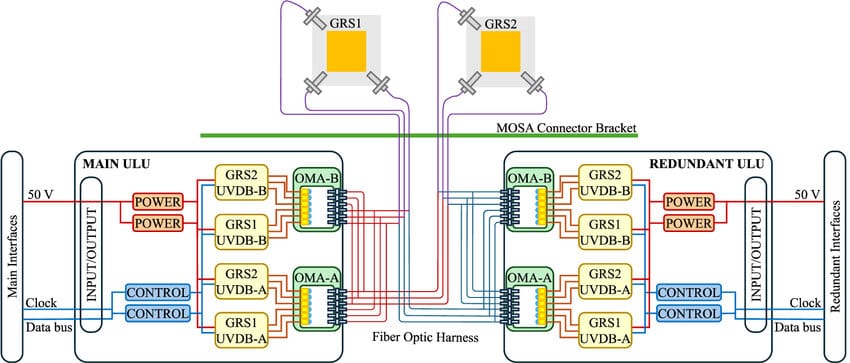
Modular robotic spacecraft offer another possibility. Instead of constructing a spacecraft as one fixed machine, we can assemble it from many connected robotic modules. Individual modules could detach, pivot around their neighbors, form new connections, and collectively reorganize the spacecraft’s body.
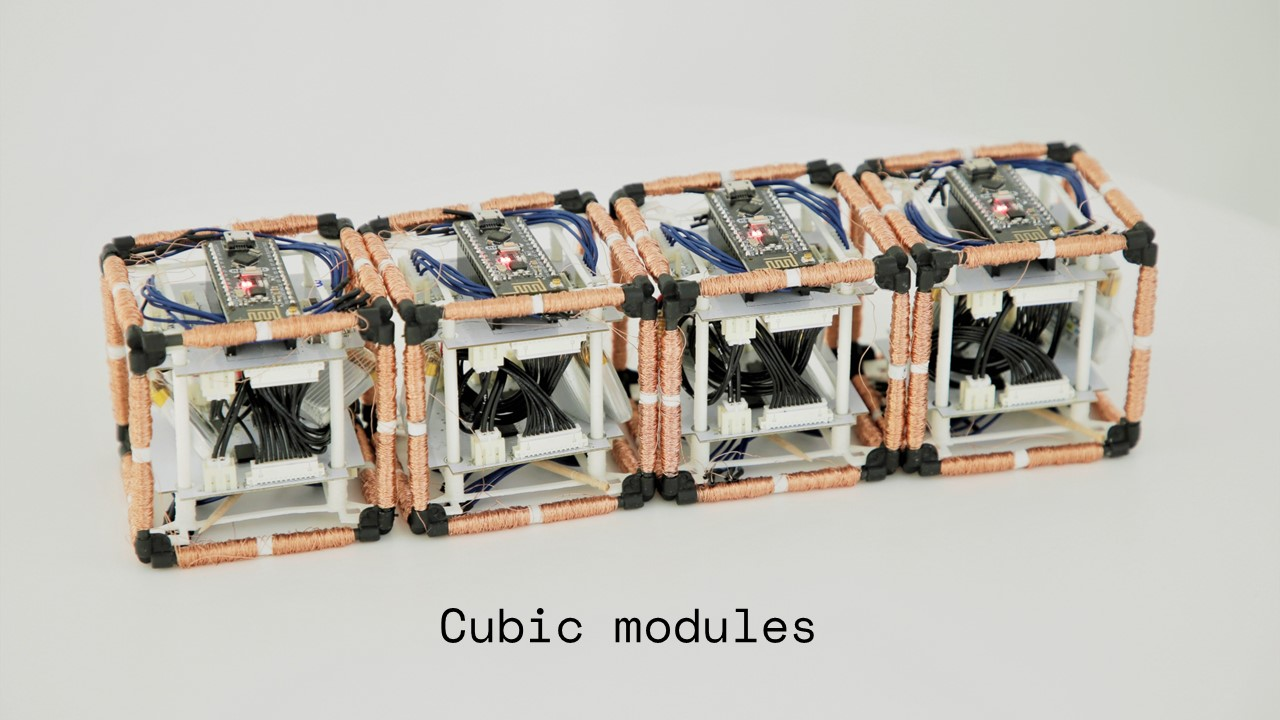
Researchers have already demonstrated many of the ingredients required for such systems. ElectroVoxel modules have performed autonomous pivoting motions in microgravity. M-Blocks have shown how cubic robots can move and reconfigure through controlled pivots.
These advances are bringing modular robotic spacecraft closer to reality. However, damage can sever both physical and communication links, leaving parts of the spacecraft disconnected and without a shared view of the system. In these cases, a global repair plan may not be possible, so the spacecraft must rely on local sensing, communication, and action. The open problem is therefore how a damaged spacecraft can detect that its structure has been disrupted, coordinate with only nearby modules, and physically reorganize itself to restore connectivity.
To explore that possibility, we looked to systems that already solve this problem every day: living organisms.
Learning to Heal from Living Systems
Living systems do not rely on a complete backup for every component. When damage occurs, nearby cells sense the change, communicate with one another, and adjust their behavior to protect the larger system.
Wound healing is a clear example. Cells near an injury respond to chemical, electrical, and mechanical signals, migrate toward the damaged region, and close the gap. The nervous system can reroute activity around damaged pathways, bones remodel in response to stress, and plant vascular systems redirect flow when a channel is blocked. In each case, repair emerges from local responses rather than a central plan.
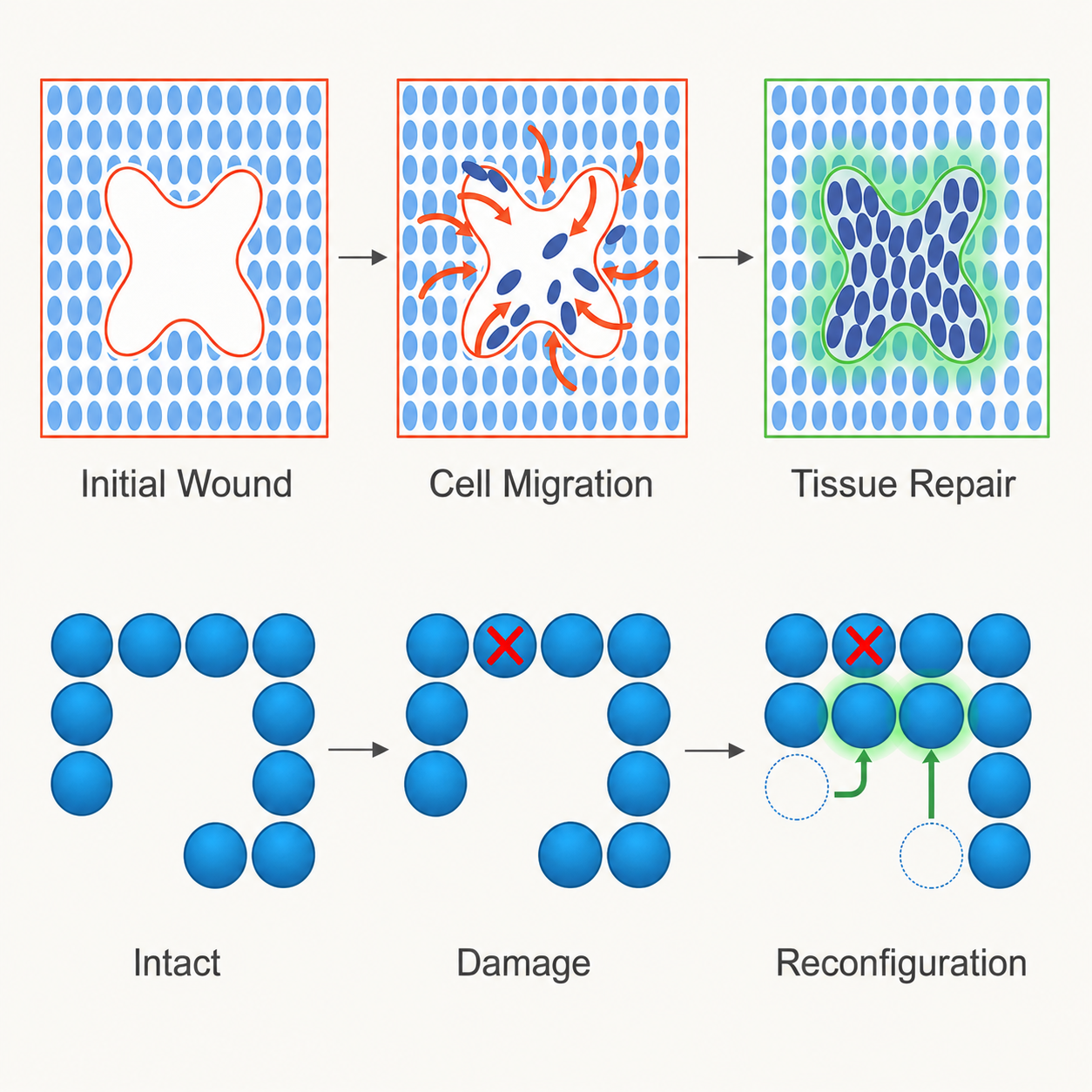
This idea is closely related to stress sharing. When individual cells communicate their internal stress, that information helps the collective identify where repair is needed and coordinate a response.
We apply the same principle to modular spacecraft. When a module fails, its neighbors detect the loss and generate a directional distress signal. That signal propagates through the surviving structure, allowing other modules to estimate the direction of the damaged region using only local information.
The repair then occurs in two phases. During coagulation, movable modules travel toward the fault and restore connectivity between disconnected parts of the spacecraft. During restructuring, they use memories of their previous neighbors to recover more of the original shape. Coagulation closes the wound, and restructuring repairs the scar.
No module needs a complete map or a centrally generated repair plan. Each one senses nearby damage, determines whether it can move safely, and takes a local action. Together, those actions allow the spacecraft to reorganize around what remains.
Life-like Machines: Morphogenesis, Homeostasis, and Metabolism
Self-repair is one part of a broader vision for machines that can adapt their physical form over time. Three biological capabilities are especially relevant:
- Morphogenesis: the ability to build, reshape, or grow a body from simpler components.
- Homeostasis: the ability to maintain function despite damage, uncertainty, and changing conditions.
- Metabolism: the ability to acquire, distribute, transform, and recycle the energy and materials needed to sustain the system.
Machines with these capabilities would be fundamentally different from the fixed systems we build today. Rather than being assembled once and operated until they fail, they could continually modify and maintain themselves.
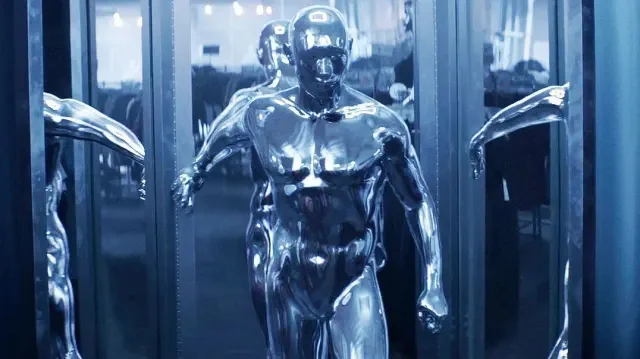
A morphogenetic spacecraft could assemble itself from modular components, expand as new material becomes available, or change its structure to support a new mission. A homeostatic spacecraft could detect damage, reroute power and communication, redistribute its modules, and restore critical functions without waiting for instructions from Earth. A metabolic spacecraft could harvest energy, reuse damaged components, and eventually process raw materials into replacement parts.
Together, these abilities could enable machines that operate for decades in environments where maintenance crews, spare parts, and real-time human supervision are unavailable. Orbital stations could grow as demand increases. Robotic construction systems could repair themselves while building infrastructure. Deep-space spacecraft could replace damaged sections, adapt to new objectives, and remain useful far beyond their original design life.
The goal is not to make machines that imitate biology in every detail. It is to identify the principles that allow living systems to grow, persist, and recover, then translate those principles into new forms of engineering.
At Manifold, we are actively developing the algorithms and architectures needed to make these systems possible. Stress-sharing is one step toward machines that do not simply endure damage, but respond to it, reorganize, and continue operating.
Enjoyed this post? Stay connected with Manifold by following us on Twitter and LinkedIn, and joining our community on Discord. You can also follow our Luma calendar for upcoming talks and events, and subscribe to the Research Log at the bottom right of this page for more project releases like this one.